
How to Treat Menopausal Skin: The Science-Backed Approach
Written by Kerry Benjamin
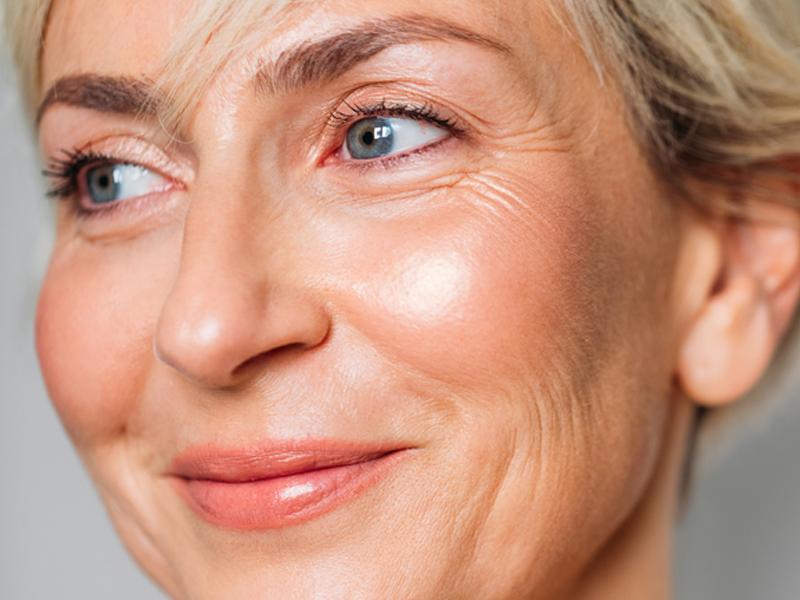
Menopause changes your skin. Not because something is wrong — because biology shifts. Estrogen declines, collagen production slows, and cell turnover takes longer than it used to. The result is skin that feels drier, looks duller, and doesn't respond to products the way it once did.
Most skincare conversations skip this part. We're not going to.
Why Menopause Affects Your Skin
Declining estrogen reduces collagen production and your skin's ability to retain moisture. That's the root cause behind most of what you're noticing — increased dryness, reduced elasticity, more visible fine lines, and skin that feels more reactive than it used to.
This isn't a flaw. It's a normal part of how skin functions as hormones shift. Understanding the why is what makes it possible to actually address it.
You Have to Exfoliate to Hydrate
Here's what most women get wrong: they add more moisturizer when their skin feels dry, without addressing what's underneath it.
The moisturizer sitting on top of dead skin cells doesn't absorb properly. It just sits there. Before hydration can work, buildup has to go.
This is where exfoliation becomes non-negotiable — not optional, not occasional, but a consistent part of the routine.
Dermaplaning removes dead skin and peach fuzz instantly, clearing the surface so your other products can actually penetrate.
The TCA Multi-Acid Face Peel, used 3–5 times weekly, exfoliates more deeply and supports cell turnover using a blend of acids, including lactic acid for added hydration.
Why Turnover Slows With Age
Skin renews itself by shedding old cells and generating new ones — a process called cell turnover. How fast that happens changes dramatically over a lifetime.
|
Age |
Turnover Cycle |
|
Infants/Children |
3–5 days |
|
Teens |
10–21 days |
|
20s |
14–21 days |
|
30s |
28–45 days |
|
40s |
45–60 days |
|
50s+ |
60–90+ days |
By the time most women reach menopause, turnover has slowed to nearly three times what it was in their twenties. That's the biological reason exfoliation matters more now than it ever did before — not because your skin is doing something wrong, but because it's doing what aging skin naturally does.
Hydration Requires Three Ingredients, Not One
Real hydration isn't one product. It's three types of ingredients working together:
-
Humectants (like hyaluronic acid) draw water from deeper layers of skin to the surface
-
Emollients soften and smooth the skin
-
Occlusives seal hydration in and prevent water loss
You'll find all three in the HA Hydrating Serum, Microbiome Moisturizer, and Shiunko Face Oil. For deeper hydration support, pairing these with the Microneedling Tool helps actives penetrate further.
Retinol Becomes More Important, Not Less
Retinol remains the most studied ingredient for boosting cell turnover and supporting collagen production — both of which decline during menopause.
Our Advanced Retinol Serum is formulated with a humectant complex specifically because menopausal skin tends to be more sensitive. You get the turnover and collagen benefits without the irritation that often comes with traditional retinol.
Don't Forget the Body
Menopausal dryness isn't limited to your face.
The TCA Multi-Acid Body Peel, used twice weekly, resurfaces skin on the body the same way the face peel does — improving texture, fading dark spots, and reducing the crepey appearance that comes with slower renewal and thinner skin.
Pair it with the Hydrating Body Serum twice daily. Apply it while skin is still damp from the shower for better absorption, and seal it in with jojoba oil if your skin needs extra support.
The Bottom Line
Menopausal skin doesn't need more products. It needs the right process — removing buildup, supporting turnover, and locking in hydration, consistently.
That's the method. Not a miracle. A method.
FAQs
About the Author

By Kerry Benjamin, California Licensed Aesthetician (Lic. #Z98459) & Founder of StackedSkincare. Kerry created the StackedSkincare Method — built on the belief that real results start with accelerating cell turnover and renewal, not adding more products. Her three-step approach — Speed it up. Slough it off. Protect it. — is the foundation of everything on this site. Featured in ELLE, Cosmopolitan, and Who What Wear.