
Melasma: What It Is And How To Deal With It
Written by Kerry Benjamin
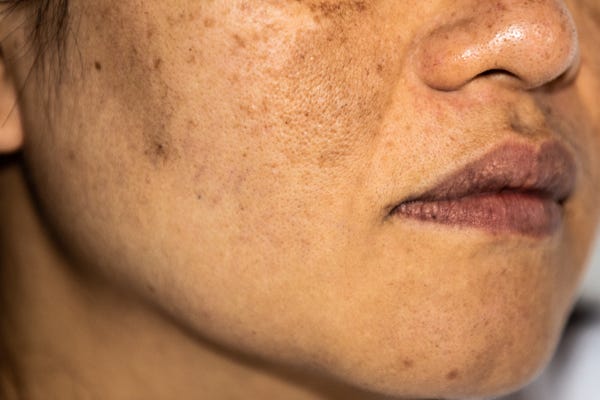
Melasma is a stubborn type of hyperpigmentation triggered by hormones, heat, and sun. Learn how to manage it with exfoliation, retinol, SPF layering, and cooling tools—without making it worse.
Melasma: What It Is and How to Deal With It
Melasma isn’t your average dark spot. It forms deeper in the skin, making it harder to treat and quicker to return.
It often appears as patchy brown or gray discoloration across the forehead, cheeks, and upper lip—and is triggered by hormonal changes, sun exposure, heat, and inflammation.
Treating melasma requires more than a brightening serum. You need to support your skin barrier, prevent inflammation, and build a consistent, calm routine that fades pigment without causing flare-ups.
What Causes Melasma?
- Hormonal shifts (pregnancy, birth control, stress)
- Heat and UV exposure
- Genetics (most common in Fitzpatrick skin types 3–6)
- Skin trauma or inflammation
- Inconsistent SPF use
Because melasma lives deeper in the dermis, surface-level treatments often don’t cut it. You need an inside-out approach.
How to Treat It Without Making It Worse
1. Gently Exfoliate With Acids + Tools
Exfoliation helps speed up cell turnover and remove pigmented cells—but overdoing it causes irritation and worsens melasma.
Use the TCA Multi-Acid Face Peel 3–5x/week to gently break up discoloration and encourage healthy skin regeneration. For even better absorption, dermaplane once a week before your peel.
2. Add Retinol or Retin-A to Your Routine
Retinol supports cell turnover and helps push melanin-rich cells to the surface where they can shed.
Our Advanced Retinol Serum uses granactive retinoid, a highly effective, low-irritation form that converts directly into retinoic acid. It’s ideal for melasma-prone skin because it doesn’t cause peeling or inflammation.
The formula also includes:
- Bakuchiol for added anti-aging benefits
- Vitamin C + Ferulic Acid to protect and brighten
- Hydrating humectants to prevent dryness
Use retinol at night and always follow with SPF the next day.
3. Cool It—Literally
Even if you’re not in direct sunlight, heat itself can trigger melasma by increasing vascular activity and stimulating melanocytes.
If you live in a hot, humid climate, your risk for flare-ups is higher.
Use the Ice Roller daily to reduce heat and inflammation—especially after workouts, outdoor time, or applying actives. It’s an easy, effective way to keep skin calm and protected.
4. Support Cell Regeneration With Microneedling
Microneedling stimulates collagen production and helps active ingredients penetrate deeper into the skin. Over time, this supports healthier skin and a more even tone.
Use it daily with the EGF Activating Serum for enhanced repair and brightening.
Alternate with peels and retinol to avoid overloading your skin. If you’re in a flare-up or experiencing irritation, pause all exfoliants until your barrier is strong.
5. Protect Your Skin Barrier Daily
A compromised skin barrier makes melasma worse. Your skin becomes more reactive, more inflamed, and more vulnerable to pigmentation.
Finish every routine with the Microbiome Moisturizer —a rich, replenishing cream powered by:
- Prebiotics to balance your skin’s microbiome
- Ceramides to reinforce the skin barrier
- Astaxanthin, a potent antioxidant that defends against UV and environmental stress
Tip: Layer this under your SPF every morning for added antioxidant protection throughout the day.
Sun Protection: Non-Negotiable
Sun exposure is the biggest melasma trigger—and even a few minutes can undo weeks of progress.
Here’s how to protect:
- Apply SPF 30+ daily, no exceptions
- Reapply every 2 hours if you’re in the sun
- Stay out of direct sunlight whenever possible
- Wear a wide-brimmed, UV-protective hat
-
Layer your SPF:
- Start with a mineral sunscreen
- Top it with a tinted SPF (for protection against visible light and blue light, which can also darken melasma)
Tinted sunscreens contain iron oxides, which block visible light—something regular SPF doesn’t fully cover. It’s a crucial step for melasma protection.
Suggested Routine for Melasma
Morning:
- Cleanser
- EGF Activating Serum
- Microbiome Moisturizer (with astaxanthin)
- Mineral SPF + Tinted SPF
- Ice Roller (optional)
Evening:
- Cleanser
- TCA Peel (3–5x/week)
- Microneedling
- EGF Serum
- Advanced Retinol Serum (2–4x/week, alternate with EGF)
- Microbiome Moisturizer
- Ice Roller (to calm any heat/inflammation)
FAQs
About the Author

By Kerry Benjamin, California Licensed Aesthetician (Lic. #Z98459) & Founder of StackedSkincare. Kerry created the StackedSkincare Method — built on the belief that real results start with accelerating cell turnover and renewal, not adding more products. Her three-step approach — Speed it up. Slough it off. Protect it. — is the foundation of everything on this site. Featured in ELLE, Cosmopolitan, and Who What Wear.