
ECZEMA: THE ITCH THAT RASHES (AND HOW TO STOP IT)
Written by Kerry Benjamin
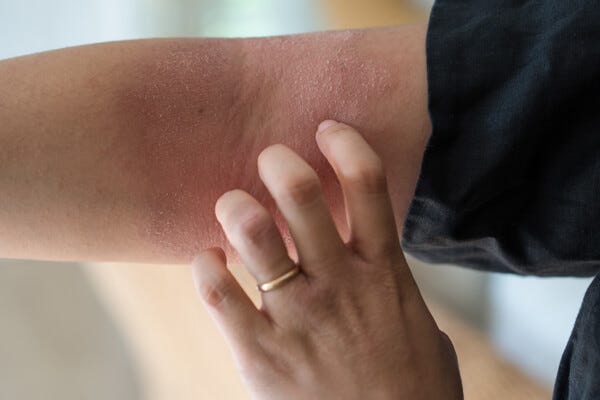
Eczema affects about 10–20% of infants and around 3% of adults and children in the U.S. If you have it, you know how itchy, painful, and unpredictable it can be. The good news: simple, consistent changes make a real difference. Here are my top 13 tips for managing eczema — the ones I actually use myself.
1. REACH FOR AN ICE ROLLER OR ICE GEL PACK INSTEAD OF SCRATCHING
Here's something most people don't know about eczema: it's called the itch that rashes. The itch comes first — and scratching is what creates the rash. So the most important thing you can do during a flare is stop the itch before you scratch.
Reach for an ice roller or gel pack instead. Cold calms the inflammation fast without aggravating the skin. Keep several gel packs in the freezer — one for when you get into bed, and extras for if you wake up itching in the night. They're soothing, mess-free, and will help you fall back asleep.
2. EXFOLIATE — BUT GENTLY
Dead skin buildup makes eczema worse and blocks products from penetrating. The fix is gentle chemical exfoliation, not scrubbing. Our TCA Multi-Acid Face Peel and TCA Multi-Acid Body Peel are loaded with lactic acid to gently exfoliate and hydrate, while salicylic acid helps calm inflammation and control bacteria. I developed both of these specifically for my own dry, sensitive, eczema-prone skin — they've helped me a lot, and I know they can help you too.
No downtime, no rinsing needed. Cleanse first, then brush on a layer and you're done. Use the face peel 3–5x per week. For the body peel, stick to no more than 2x per week — but if you want to exfoliate more often, add a small amount to your body moisturizer. Diluting it this way still gives you the exfoliation and hydration your skin needs without overdoing it.
3. GET AN ALLERGY AND HORMONE TEST
Environment and food are common eczema triggers — getting an allergy test to pinpoint your specific triggers and then avoiding them can lead to significant improvement.
Hormones are worth looking at too. Estrogen helps maintain the skin barrier and supports ceramide production — the lipids that keep moisture in and irritants out. When estrogen drops, as it does in perimenopause and menopause (and during hormonal fluctuations throughout the cycle), the barrier weakens, skin gets drier, and eczema flares more easily. If your flares seem to track with your cycle or have gotten worse as you've gotten older, ask your doctor about hormone levels. It may be a bigger piece of the picture than you think.
4. TRY AN OTC ANTIHISTAMINE OR HYDROCORTISONE CREAM
Eczema is often driven by an allergic response. An over-the-counter antihistamine can help block that response and may reduce the frequency and severity of flare-ups. During an active flare, an OTC hydrocortisone cream can help calm inflammation and give the skin a chance to settle. Check with your pharmacist if you're unsure which option is right for your situation.
5. MOISTURIZE WITH THE RIGHT INGREDIENTS
A moisturizer only works if it has the right combination of ingredients. You need humectants (like hyaluronic acid) to draw water into the skin, emollients to soften and smooth, and occlusives (like oils) to seal everything in and prevent water loss. Stick to fragrance-free formulas — fragrance is one of the most common eczema triggers.
Our Microbiome Rescue Daily Moisturizer delivers the humectant and emollient layers your skin needs, and our Shiunko Face Oil seals it all in and prevents water loss. Layer them morning and night for best results.
6. TRY THE SARAN WRAP METHOD
After your shower, apply your moisturizer to any scaly or inflamed areas, then seal it with a layer of Vaseline on top. Wrap the area in plastic wrap and leave it overnight. The Vaseline acts as a powerful occlusive, locking everything in and preventing water loss while you sleep. Remove the wrap in the morning, cleanse, and reapply your moisturizer. If you're especially itchy, place an ice gel pack over the wrap for extra relief.
7. TAKE MELATONIN TO IMPROVE YOUR SLEEP
Poor sleep makes inflammation worse — and eczema makes sleep harder. Taking melatonin about an hour before bed can help you get a deeper, more restorative sleep. Give yourself 7–8 hours so you don't wake up groggy.
8. EASE UP ON EXERCISE DURING FLARE-UPS
Sweat dehydrates the skin and the sodium in it can sting and irritate already inflamed skin. When eczema is active, skip the intense workouts and opt for walking, cycling, or lighter movement until things calm down.
9. ENCASE YOUR MATTRESS AND PILLOWS
Most people with eczema are also allergic to dust mites. Encasing your mattress and all pillows in allergen-proof covers limits your exposure while you sleep. Keep bedding minimal, avoid rugs in the bedroom, and keep window treatments simple.
10. CHANGE YOUR SHEETS MORE OFTEN THAN YOU THINK YOU NEED TO
Changing your sheets more than once a week can make a noticeable difference in nighttime itching. If your eczema is mainly on your face and neck, try swapping your pillowcase every single night.
11. GET RID OF CARPETING IF YOU CAN
Dust mites live in carpet, rugs, and drapes — all common eczema triggers, especially in kids. If you can remove them, do it. If you can't, vacuum and clean them thoroughly every week.
12. USE A HUMIDIFIER
Dry air pulls moisture from your skin and triggers flare-ups. If you live in a dry climate or anywhere with cold winters, a humidifier is non-negotiable. Keep indoor humidity between 35–50%. If you also have allergies, choose one with a built-in air purifier or filter.
13. KEEP THE TEMPERATURE COOL AT NIGHT
Heat dries out the air — even with a humidifier running. Keep your home no warmer than 68 degrees at night, run the humidifier, and layer blankets instead of turning up the heat. This helps replenish the moisture your skin loses during the day.
FAQs
About the Author

By Kerry Benjamin, California Licensed Aesthetician (Lic. #Z98459) & Founder of StackedSkincare. Kerry created the StackedSkincare Method — built on the belief that real results start with accelerating cell turnover and renewal, not adding more products. Her three-step approach — Speed it up. Slough it off. Protect it. — is the foundation of everything on this site. Featured in ELLE, Cosmopolitan, and Who What Wear.