
Should You Pop Your Pimples?
Written by Kerry Benjamin
Should You Pop Your Pimples? Why Picking Damages Your Skin
Short answer: no. And I say that as someone who has spent years extracting skin professionally.
We've all been there. You spot a pimple in the mirror, and the urge to squeeze it is almost impossible to resist. There's a hit of instant gratification when it finally pops — but the damage you can do to your skin far outlasts the blemish you were trying to get rid of.
Picking is the single most damaging thing most people do to their own skin. Here's what's actually happening when you do it, and what to do instead.
What Happens When You Pick
When you pick at an inflamed breakout, you damage more of the surrounding skin and extend the healing time — often turning a two-day blemish into a two-month problem.
The biggest consequence is post-inflammatory hyperpigmentation (PIH): the brown or red marks left behind after a breakout. PIH is caused by inflammation and picking, and it's far harder to fade than the original pimple would have been if you'd left it alone.
Picking also spreads bacteria. When you squeeze with your fingers, you press oil, dirt, and bacteria deeper into the skin — which can trigger more breakouts around the original spot, or even a skin infection.
And cystic acne — the deep, painful kind — can't be extracted at all. There's nothing at the surface to release. Squeezing a cyst only pushes bacteria further down and makes it bigger, more inflamed, and longer-lasting.
Why One Pop Does More Damage Than You Think
The reason picking scars comes down to depth.
A blemish left alone typically resolves at the surface. But when you force a pimple, you rupture the follicle wall below the skin, spilling inflammatory debris into the surrounding tissue. That deeper trauma is what triggers stubborn hyperpigmentation and, in some cases, permanent textural scarring.
This is also why breakouts feel like they multiply after a picking session — you've physically spread bacteria across your face.
The Right Way to Handle a Breakout
The safest extraction is the one you don't do. Here's how to handle a breakout without wrecking your skin:
- Don't pop it. Treat it. Reach for a high-frequency device instead of your fingers. High frequency is a safe, effective way to kill acne-causing bacteria deep below the surface and calm inflammation — no squeezing required. This is my go-to for an active breakout.
- If it's genuinely ready, don't force it. A blemish that's truly ready to release will come out with almost no pressure. If it resists at all, stop — it's not ready, and forcing it guarantees damage. Never dig, never use your nails.
- If anything comes out, cleanse immediately. The moment anything releases, wipe the area with two clean pieces of tissue, then cleanse your whole face right away so bacteria doesn't settle back into the skin and spark new breakouts.
- Apply EGF Activating Serum to heal. Immediately after cleansing, apply EGF Activating Serum. The growth factors support your skin's natural repair process, so the spot heals faster and you're far less likely to be left with a mark.
Daily Skincare to Prevent Breakouts
The best way to stop picking is to have less to pick at. A consistent routine built on four steps — exfoliate, treat, moisturize, protect — keeps skin clearer between breakouts.
1. Exfoliate
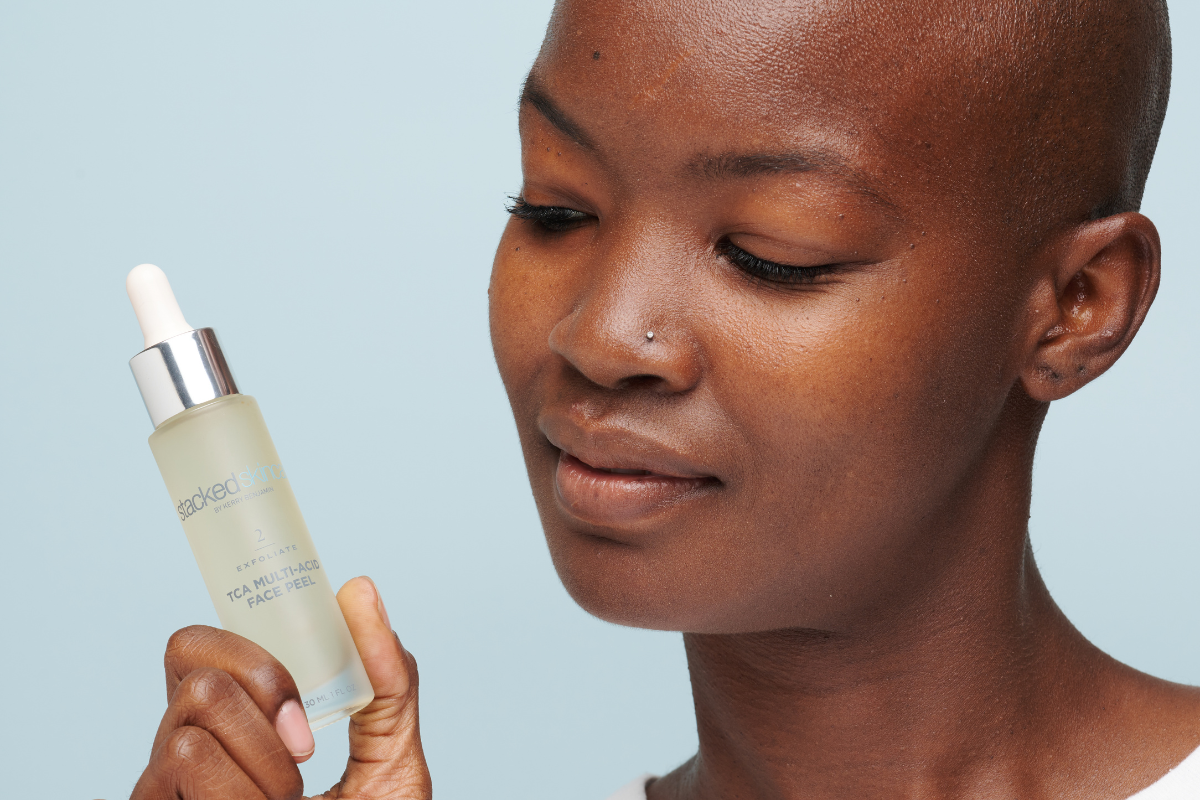
Buildup, oil, and dead skin are what clog pores in the first place. The TCA Multi-Acid Face Peel combines TCA, BHA, and AHA in one formula to clear congestion, keep pores clear, and smooth texture. It's formulated for home use and delivers pro-level results.
2. Treat
Use a high-frequency device on active breakouts to kill bacteria, then support healing with EGF Activating Serum. Add Advanced Retinol Serum to accelerate cell turnover and keep pores clear over time — retinol is one of the most effective ingredients for acne-prone skin. Just keep your peel and your retinol on separate nights, never the same evening.
3. Moisturize
Don't skip this step, even if your skin is oily. When skin is stripped and dry, it overproduces oil to compensate — which leads to more breakouts, not fewer. A lightweight HA serum or water-based moisturizer keeps skin balanced and hydrated without clogging pores.
4. Protect
Protection works two ways. In the evening, seal in moisture and guard against water loss with Shiunko Face Oil. During the day, wear SPF every single day, no exceptions — sun exposure deepens post-acne marks and makes hyperpigmentation significantly harder to fade.
A few easy habits make a real difference too: change your pillowcases regularly, and wipe your phone screen down with alcohol, since both collect the bacteria you press into your skin all day.
A Note for Hormonal and Adult Acne
If you're breaking out in your 30s, 40s, and beyond, you're not imagining it. Hormonal shifts — especially during perimenopause — can trigger adult acne along the jaw and chin, often on skin that's simultaneously getting drier. The instinct is to attack it, but harsh scrubbing and picking only inflame already-reactive skin. The same approach applies: exfoliate consistently, treat gently, keep skin moisturized, protect daily, and keep your hands off.
Kerry's Perspective
After 15 years of treating skin, I can tell you the clients with the clearest skin aren't the ones fighting every breakout in the mirror. They're the ones who stopped picking and got consistent.
I know how hard the urge is. But almost every scar and dark spot I've treated came from picking, not from the acne itself. Give your skin the chance to heal, treat it with the right tools, and it will reward you.
Hands off. Trust the process.
Final Thoughts
Popping pimples feels productive in the moment, but it's one of the fastest ways to cause scarring, dark spots, and more breakouts. The safest approach is not to pick at all — treat active breakouts with a high-frequency device, and if anything ever does release, cleanse immediately and apply EGF serum to heal.
Stay consistent with exfoliation, treatment, moisture, and daily SPF, and you'll have far less to pick at in the first place.
FAQs
About the Author

By Kerry Benjamin, California Licensed Aesthetician (Lic. #Z98459) & Founder of StackedSkincare. Kerry created the StackedSkincare Method — built on the belief that real results start with accelerating cell turnover and renewal, not adding more products. Her three-step approach — Speed it up. Slough it off. Protect it. — is the foundation of everything on this site. Featured in ELLE, Cosmopolitan, and Who What Wear.