
Folliculitis: Why It Happens and How to Actually Treat It
Written by Kerry Benjamin
Written by Kerry Benjamin, Licensed Aesthetician & Founder of StackedSkincare
If you've been treating small, persistent bumps on your face or body like acne and getting nowhere, there's a good chance you're not dealing with acne at all. You're dealing with folliculitis — and it requires a completely different approach.
What Is Folliculitis (And Why It's Mistaken for Acne)
Folliculitis is inflammation of the hair follicle. It shows up as small red bumps, sometimes with a white head, often in clusters — which is exactly why it gets confused with acne so often.
The bumps look similar. The location overlaps. But the cause is different, and so is the fix. Treating folliculitis like acne usually means you're targeting the wrong problem entirely.
What Causes Folliculitis
Folliculitis happens when a hair follicle becomes blocked, irritated, or infected. The mechanism is mechanical, not just bacterial.
Here's what's actually happening beneath the surface: dead skin cells build up around the follicle opening. That buildup traps the hair as it tries to grow, causing it to bend back on itself instead of exiting the skin normally. Once the hair is trapped, bacteria gets trapped along with it — and that's what triggers the inflammation and bumps you're seeing.
It's a buildup problem first. Bacteria is part of it, but it's not the root cause.
Why Dead Skin Buildup Is the Real Trigger
This is the part most people miss.
Skin renewal naturally sheds dead cells from the surface. When that process slows down — or when buildup accumulates faster than it sheds — dead skin collects around the follicle opening. That buildup is what blocks the hair from exiting cleanly.
Once the hair bends inward, the follicle becomes an enclosed environment. Bacteria that would normally sit harmlessly on the surface now has nowhere to go, and inflammation follows.
This is why folliculitis tends to recur in the same areas. If the buildup isn't addressed, the cycle repeats.
Does a High-Frequency Device Help With Folliculitis?
This is one of the most common questions I get, and the honest answer is: partially.
A high-frequency device helps reduce surface bacteria and calm inflammation. That's a real benefit, and it can make active folliculitis look and feel better in the short term.
But it doesn't address the buildup that's trapping the hair in the first place. If dead skin is still blocking the follicle, the underlying cause hasn't been resolved — which means the bumps are likely to come back.
High frequency is a helpful supporting step. It's not the fix.
The Right Way to Treat Folliculitis: Remove the Buildup First
If buildup is the root cause, the solution has to start there.
Effective treatment removes the dead skin trapping the follicle, supports faster cell turnover so buildup doesn't reaccumulate, and calms the inflammation already present. That requires exfoliation, ingredients that support turnover, and barrier support — in that order.
The Folliculitis Protocol, Step by Step
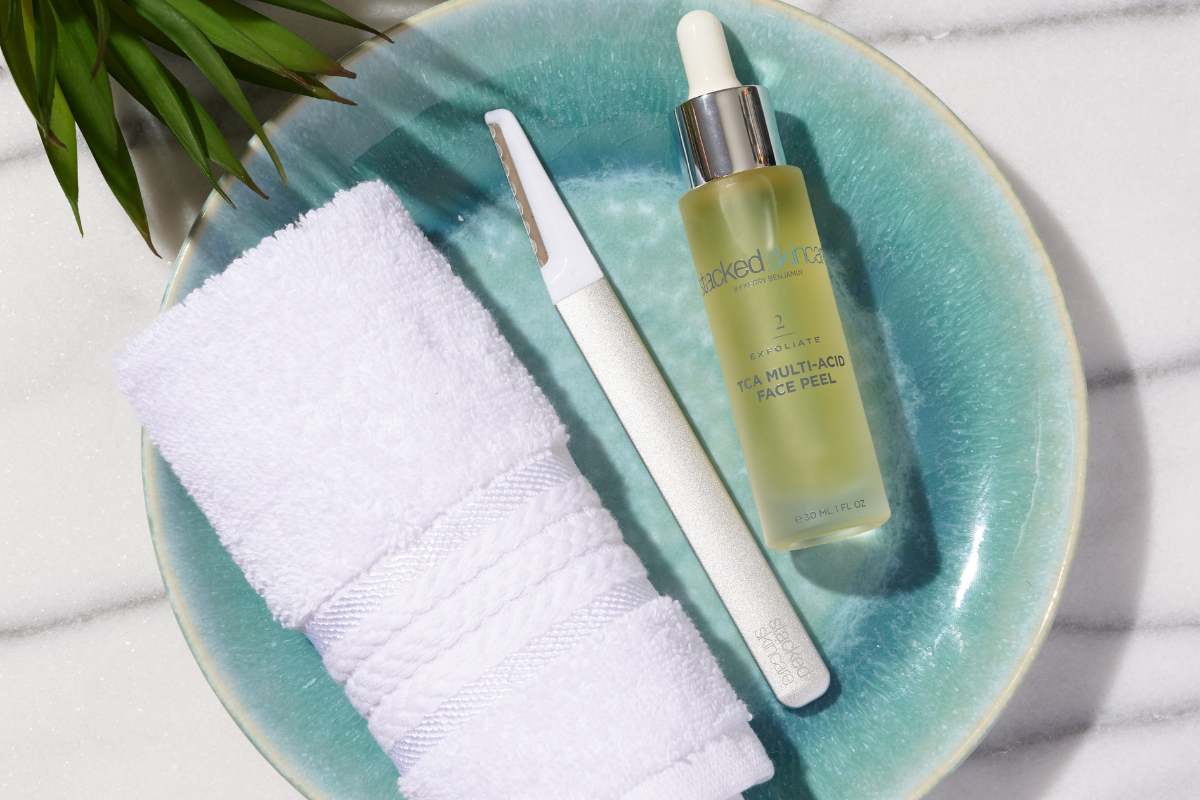
1. Dermaplaning
Removes the layer of dead skin sitting on the surface, clearing the path for everything that follows. This is the first step because nothing else works as well through buildup.
2. TCA Multi-Acid Peel (Face or Body)
Exfoliates more deeply than dermaplaning alone, helping clear buildup directly around the follicle and supporting the skin's natural renewal process.
3. Retinol
Supports ongoing cell turnover so buildup doesn't reaccumulate as quickly. This is the step that helps prevent recurrence, not just treat what's already there.
4. EGF Activating Serum
Supports the skin barrier and helps calm inflammation after exfoliation. This step matters because treating folliculitis effectively requires recovery support, not just removal.
The Bottom Line
Folliculitis isn't acne, and it doesn't respond to acne treatment the way people expect. It's a buildup problem that traps hair and bacteria together, and the only way to resolve it long-term is to address the buildup directly — not just the surface symptoms.
Dermaplaning, peels, retinol, and barrier support work together to break the cycle. A high-frequency device can help in the short term, but it's a supporting step, not a solution on its own.
FAQs
About the Author

By Kerry Benjamin, California Licensed Aesthetician (Lic. #Z98459) & Founder of StackedSkincare. Kerry created the StackedSkincare Method — built on the belief that real results start with accelerating cell turnover and renewal, not adding more products. Her three-step approach — Speed it up. Slough it off. Protect it. — is the foundation of everything on this site. Featured in ELLE, Cosmopolitan, and Who What Wear.