
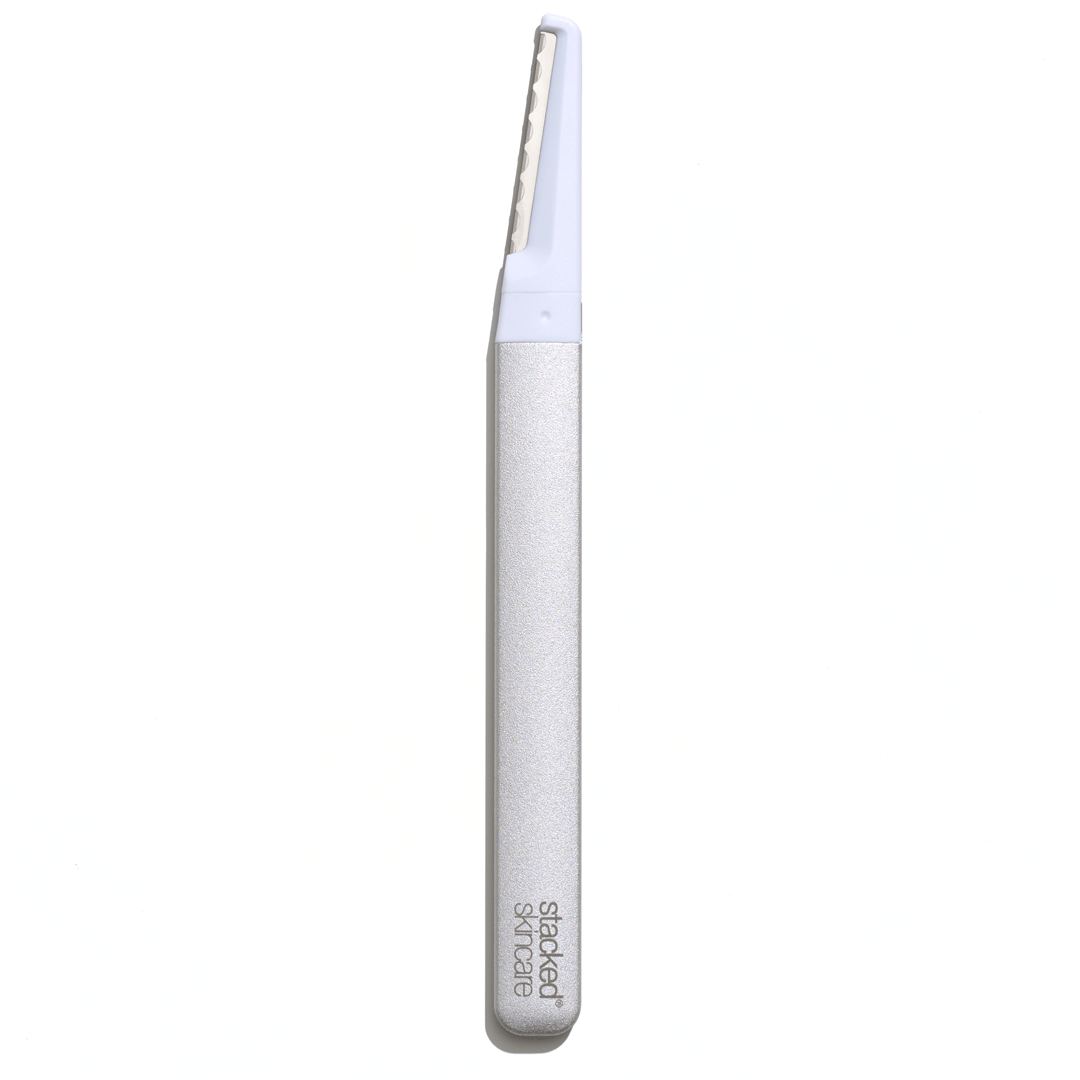


Dermaplaning Exfoliation Tool

free u.s. shipping on orders over $75

30 day guarantee or your money back

developed by kerry founder + aesthetician
Choose options
Dermaplaning is Exfoliation.
Hair Removal is the Side Benefit.
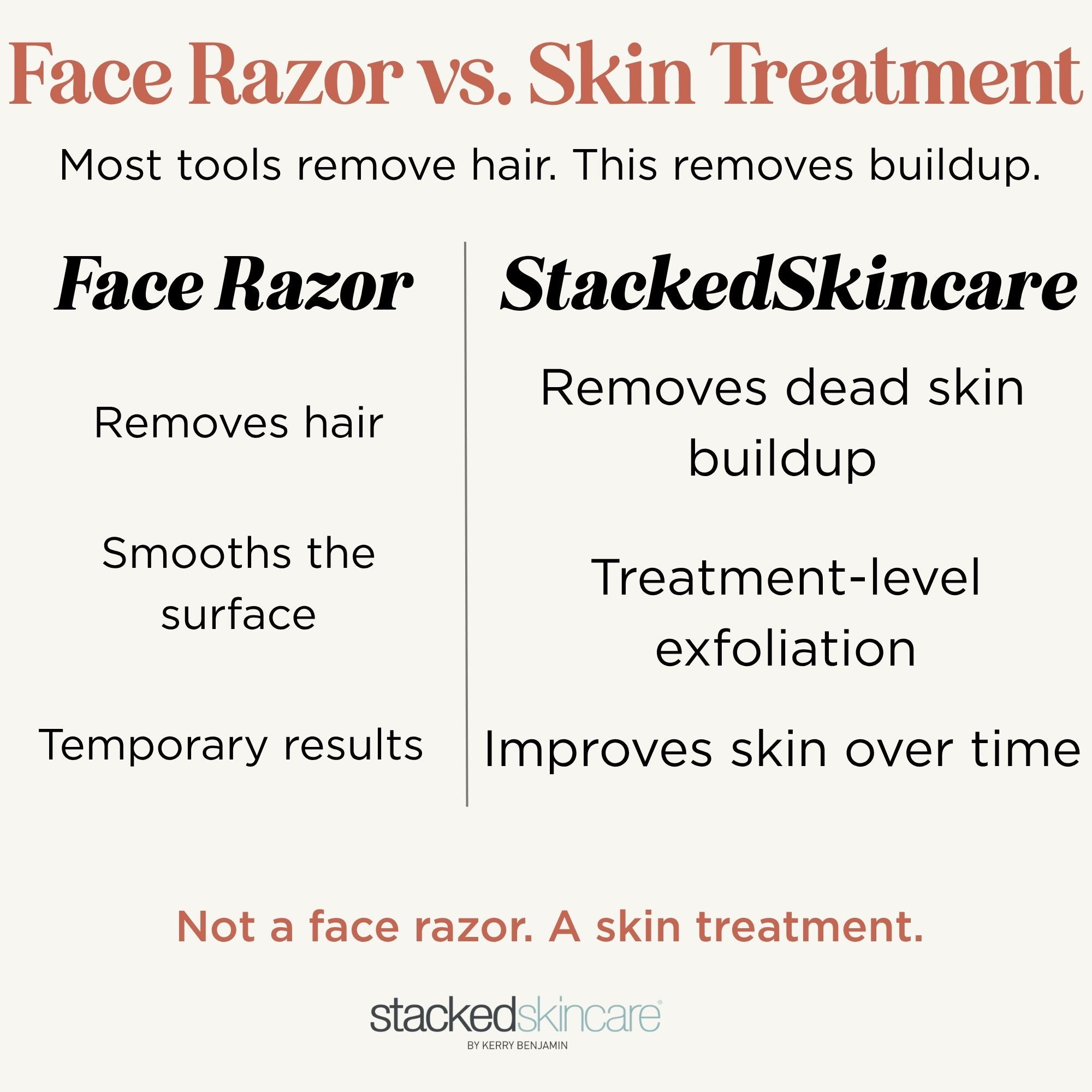
Not a Face Razor. A Skin Treatment.
Dermaplaning Tool That Makes Your Skincare Work Better
Pro-Level Exfoliation for Smoother, Brighter Skin
Most dermaplaning tools only remove hair. True dermaplaning is exfoliation—removing dead skin buildup first, with peach fuzz removal as a secondary benefit. This tool does both, so your skin looks smoother, brighter, and your skincare actually works better.
Developed by aesthetician Kerry Benjamin, this dermaplaning tool removes dead skin buildup and peach fuzz to smooth texture, boost glow, and dramatically improve product absorption.
As an aesthetician, dermaplaning has always been one of my favorite treatments because it instantly smooths texture and dramatically improves how skincare performs.
Dermaplaning has always been an exfoliation treatment. Hair removal is just the bonus.
What Is Dermaplaning?
Dermaplaning is not shaving—it's exfoliation.
Dermaplaning is an exfoliation technique that removes dead skin cells and vellus hair, commonly called peach fuzz, from the surface of the skin using a precision blade.
This process smooths texture, brightens dull skin, and allows serums and active ingredients to absorb more effectively.
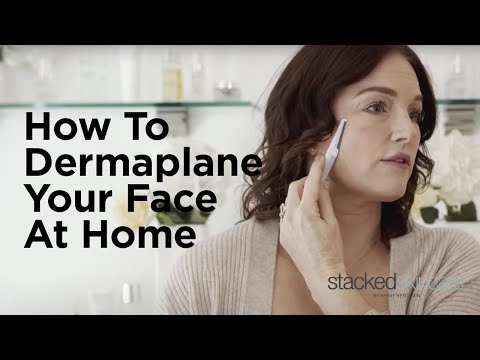
This dermaplaning tool allows you to safely perform dermaplaning at home while getting the kind of smooth, polished results usually associated with in-office treatments.
What This Tool Does
- Exfoliates dead skin buildup
- Improves product absorption
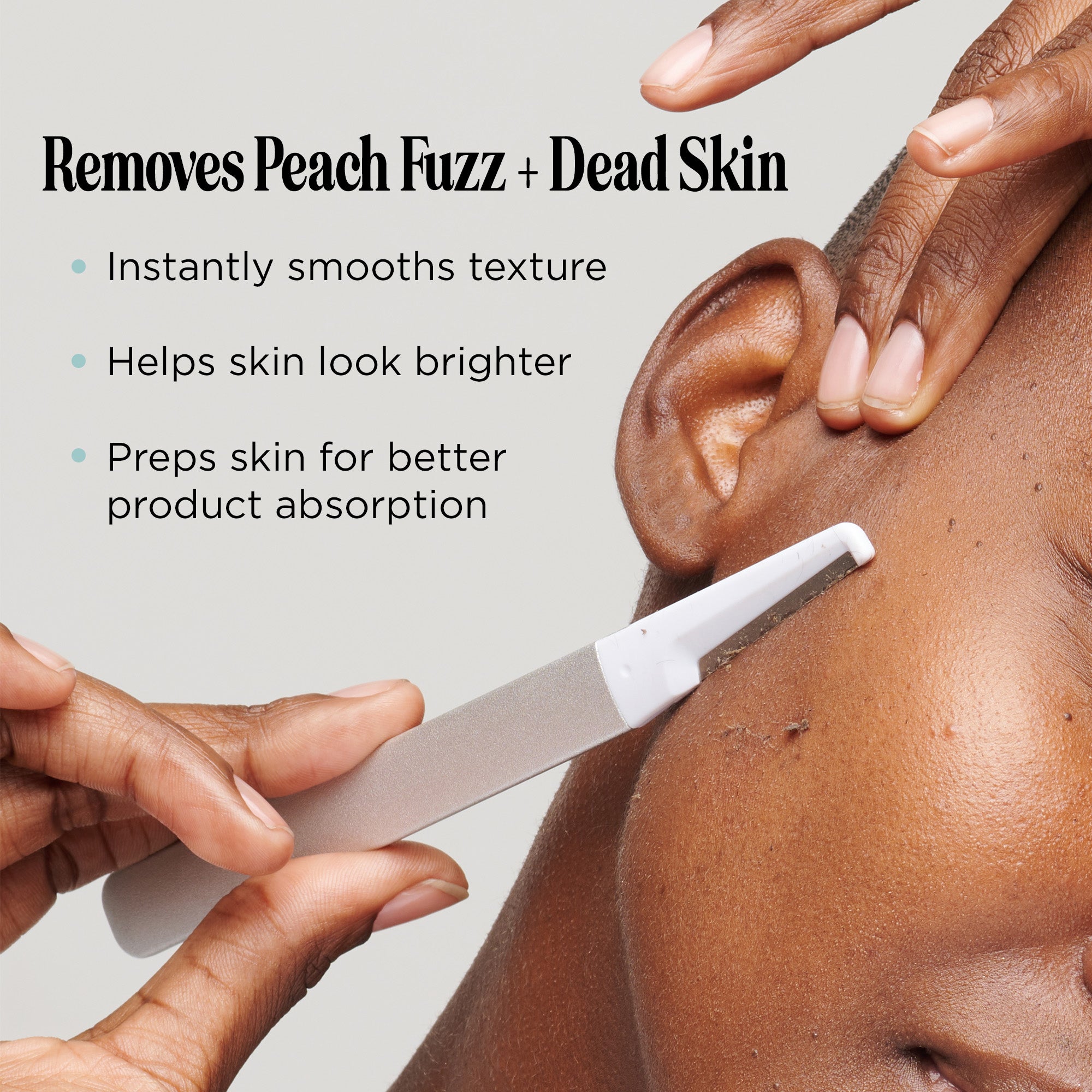
- Removes peach fuzz from the face
- Smooths texture and brightens skin
- Creates smoother makeup application
- Delivers visible results after one use
Does Dermaplaning Remove Peach Fuzz?
Yes. Dermaplaning is one of the most effective ways to remove peach fuzz from the face while also exfoliating dead skin buildup. The blade removes vellus hair at the surface, leaving skin smoother, brighter, and better prepped for skincare.
- Smoother makeup application
- Brighter-looking skin
- Better product absorption
- Instant peach fuzz removal
Because dermaplaning removes hair at the surface of the skin, peach fuzz does not grow back thicker, darker, or coarser.
Why This Is Different
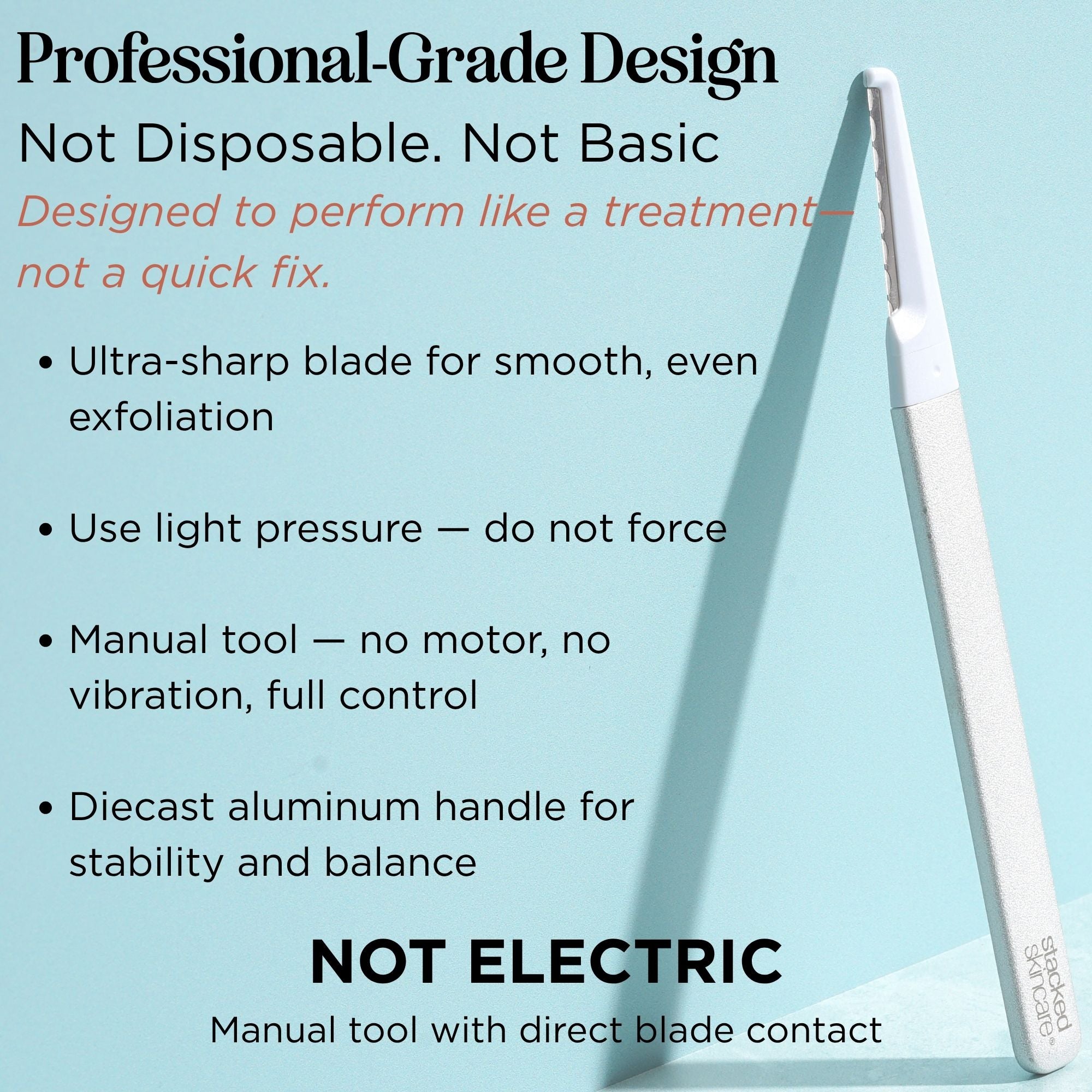
This is not a disposable razor.
Most tools are designed for hair removal. This tool is designed for controlled, pro-level exfoliation.
- Direct blade contact for more precise exfoliation
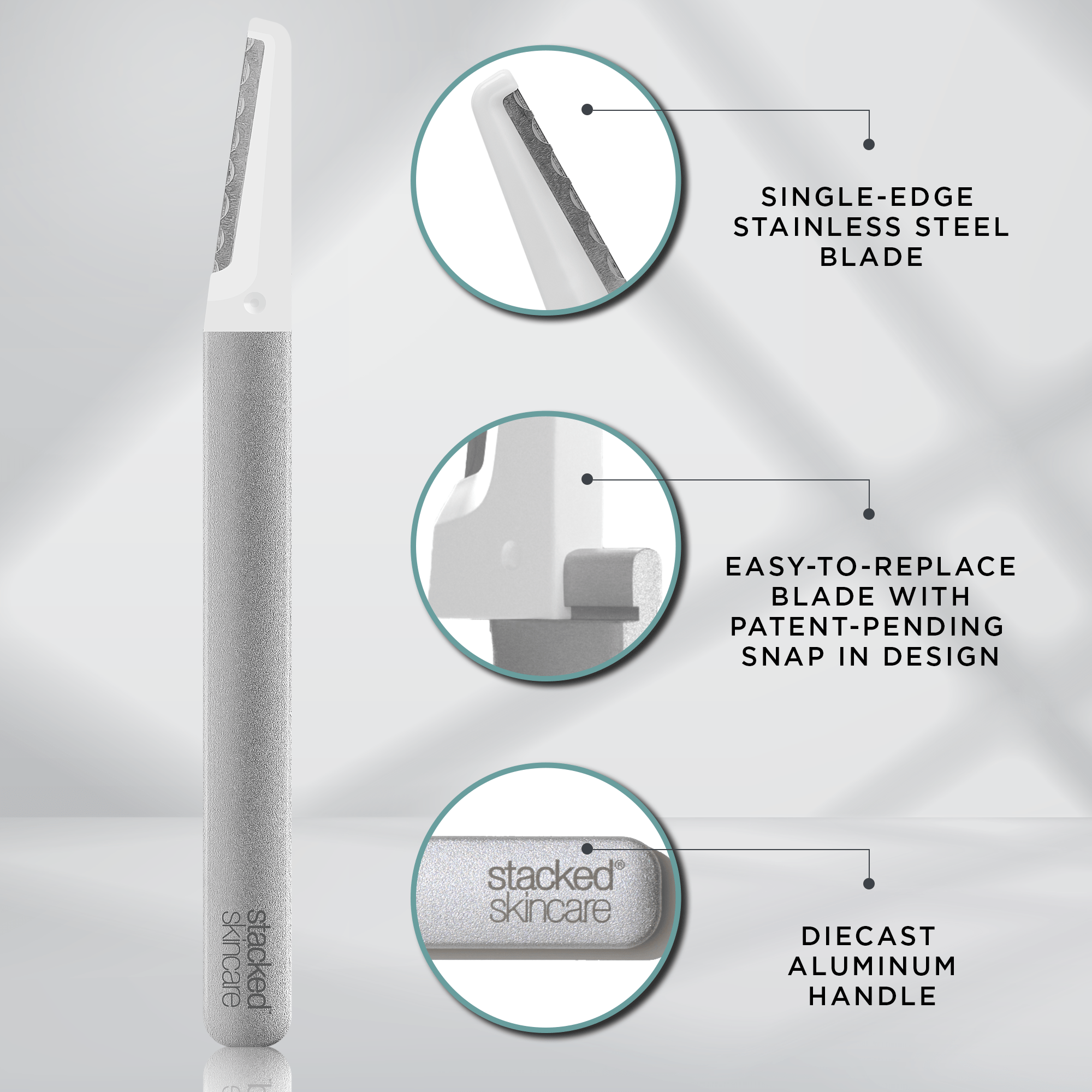
- Reusable aluminum handle
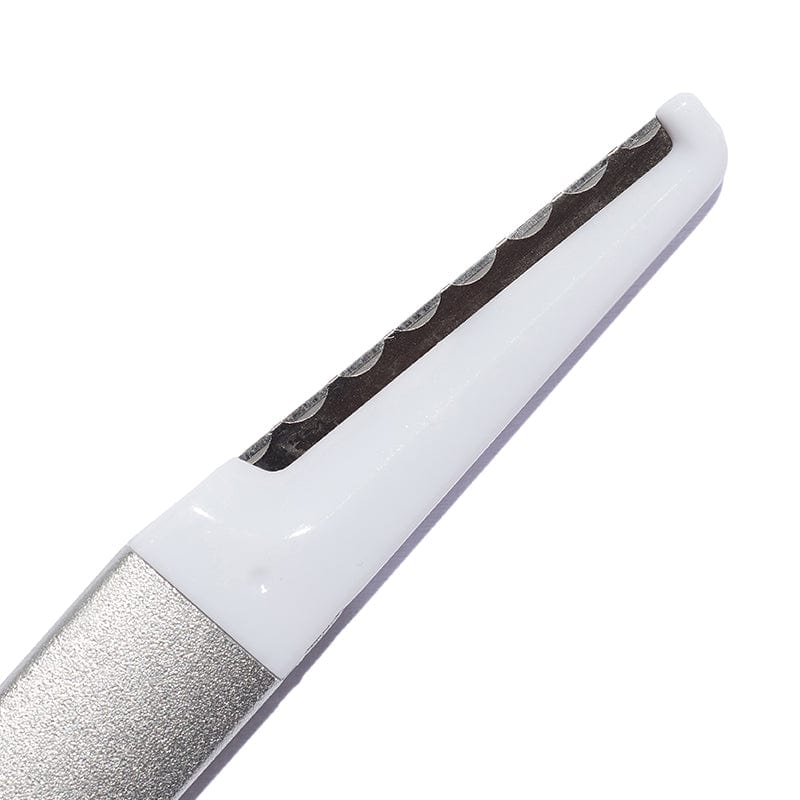
- Precision stainless steel blade
- Designed by an aesthetician to deliver pro-level results at home
Dermaplaning Tool vs. Dermaplane Razor
A face razor removes hair. A dermaplaning tool removes buildup.
A dermaplaning tool is not the same as a cheap disposable dermaplane razor.
While both remove peach fuzz, a true dermaplaning tool is designed for better control, more precise exfoliation, and a smoother overall finish. It removes dead skin buildup while helping skincare absorb more effectively.
- Dermaplaning tool: reusable handle, controlled technique, replaceable blade, designed for exfoliation and peach fuzz removal
- Disposable dermaplane razor: plastic tool primarily designed for basic hair removal with less control and precision
If you want a more elevated at-home dermaplaning experience with smoother, more refined results, this is the tool.
How This Compares to In-Office Dermaplaning
| At-Home Tool | In-Office Treatment |
|---|---|
| One-time investment | $100–$250 per session |
| Use on your schedule | Monthly appointments |
| Full control over pressure and technique | Dependent on provider |
| Replaceable blade | Single-use clinical blade |
Get pro-level results without the recurring appointment cost.
Who Should Avoid Dermaplaning
- Active inflamed acne
- Open lesions or healing skin
- Skin that is severely irritated
Safety Information
- Safe to use during pregnancy
- Blade contains 5% nickel
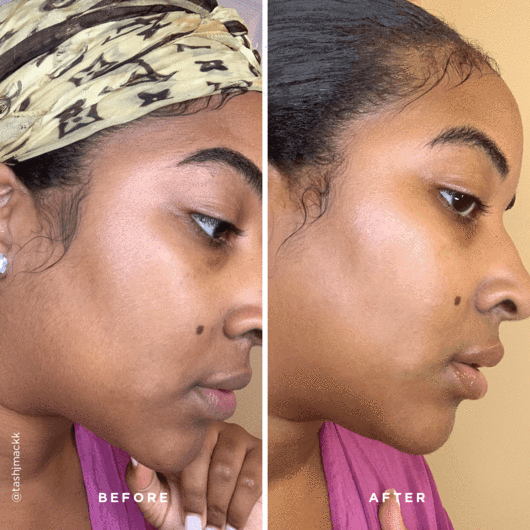
Before & Afters
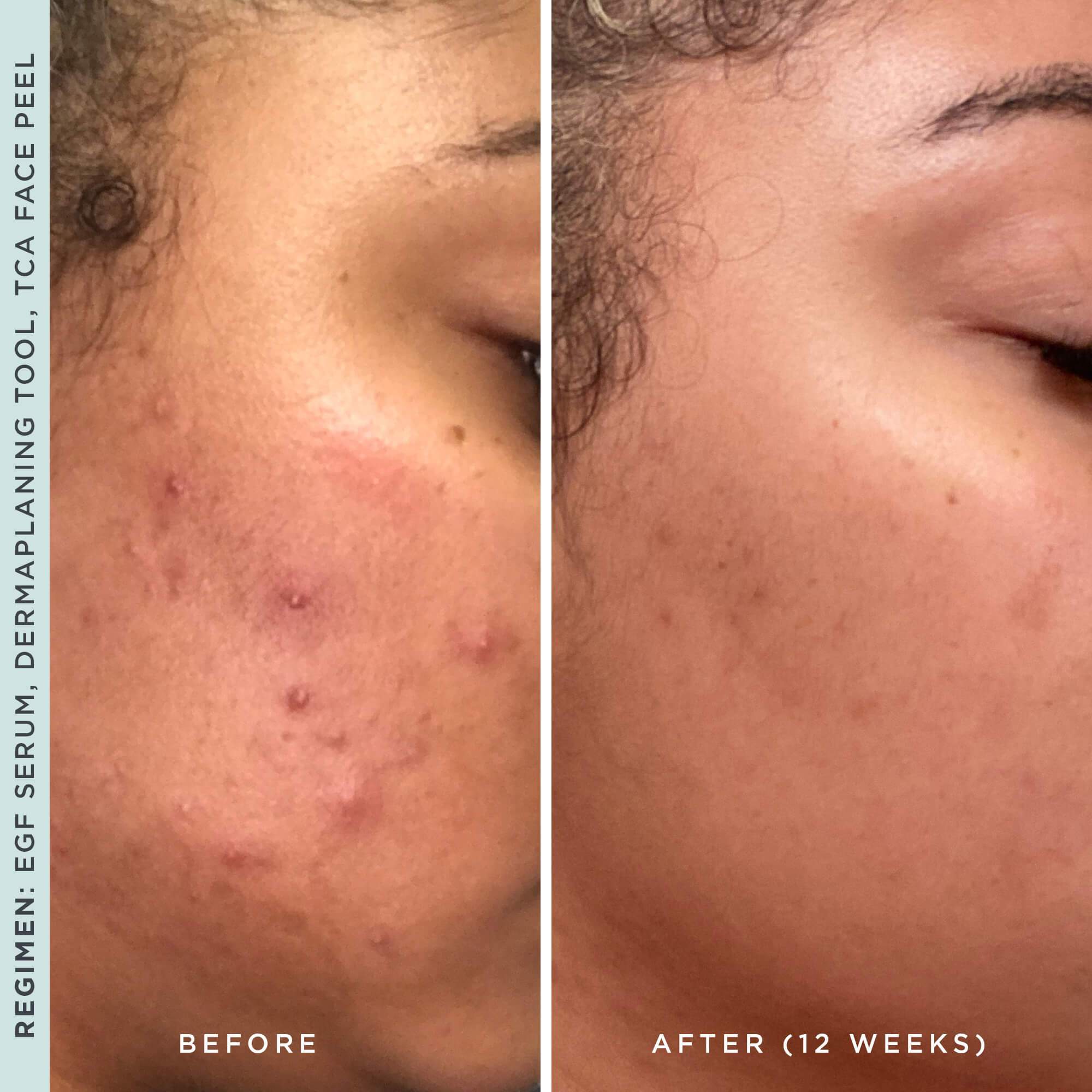
Frequently Asked Questions
Your questions, answered
-
How should I position my free hand while dermaplaning?

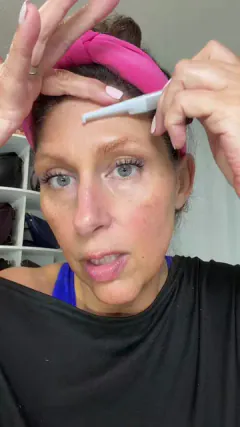
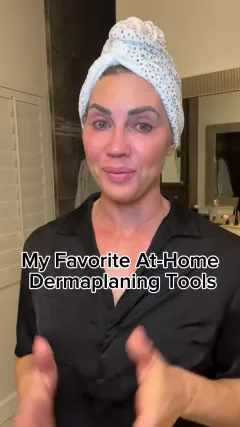 Use your free hand to hold the skin taut in the area you're working on, which helps the blade glide smoothly and safely.

 "And then make sure you're always pulling your skin taut with your hand behind the blade."
 "You're going to pull your skin back"
 "make sure that skin's taut"
 "You want to make sure your hand is behind the blade holding your skin taut while you move the blade down your skin."
 "No matter what side of the face you're on, it's always important to have your hand behind the blade, pulling your skin taut."
 "you want your hand behind the blade pulling your skin taut."
 "No matter what side of the face you're on, it's always important to have your hand behind the blade, pulling your skin taut."
 -
Is the dermaplaning tool handle reusable?
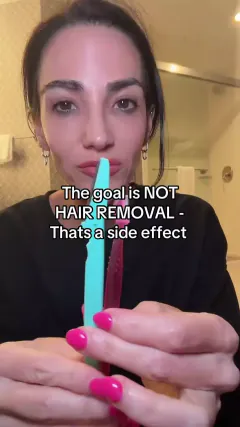 Yes, the handle is reusable. You only need to purchase replacement blades.
"The only investment you have to make is this handle tool, which is reusable."
Yes, the handle is reusable. You only need to purchase replacement blades.
"The only investment you have to make is this handle tool, which is reusable." -
What areas of the face should I dermaplane?
You can dermaplane your entire cheek, jaw, chin, the area above your lips, and your forehead.
"you're going to cover the entire cheek, jaw, chin, above your lips, and your forehead."
-
How is the StackedSkincare dermaplaning tool different from other tools on the market?
It uses a sharper, higher-quality blade with more blade exposure, so it removes more dead skin and peach fuzz without irritation. Unlike flimsy, lightweight alternatives, it features a heavy-duty aluminum handle that makes it easy to maneuver. Many other tools rely on a dull blade behind a heavy guard, which only skims the surface and can tug at the skin — the StackedSkincare blade glides for a smoother, more effective exfoliation.
"Those little cheap razors are horrible and they do not work, they like tear your skin to pieces."
"And it's not flimsy and lightweight like these cheap ones, because the handle is nice and heavy duty, it makes it really easy for you to maneuver it."
"One of the key differences between our tool and some of the other solutions out there is you can see that our blade guard is still going to give you some protection, but we allowed for much more blade and a lot less blade guard, where the other tools on the market are primarily just a blade guard so you're not going to get as deep of a treatment as this tool is going to give you."
-
How should I hold the dermaplaning tool in my hand?
Always hold your handle with your finger at the base of the head to give you maximum control. You can hold it like a pencil, resting your index finger on top of the blade when using downward strokes, or underneath the blade when moving upward, and let it glide with light pressure.
"Always hold your handle with your finger at the base of the head to give you maximum control."
"always have your finger behind where the blade goes."
"The best way to hold the blade is going to be almost like a pencil where you want your index finger, either on the top of the blade if you're going to go ahead and be using it going downward, or underneath the blade if you're going to go upward with it."
-
Who designed the StackedSkincare dermaplaning tool?
It was designed by celebrity esthetician Kerry Benjamin, the founder of StackedSkincare, to give you a fresh, smooth, post-facial look at home.
"I'm Kerry Benjamin, I'm the aesthetician and founder of Stacked Skincare. I designed this dermaplaning tool to get you the most professional results at home."
"That is where the StackedSkincare comes in, developed by an esthetician, with a surgical blade and an aluminum handle."
"I'm Kerry Benjamin, aesthetician and founder of StackedSkincare and this is our dermaplaning tool."
 "So, totally designed by an esthetician to give you that fresh, smooth post facial look at home."
 -
How often should I replace the dermaplaning blade?
 Replace the blade about once a month for best results. Blades dull with use, so a fresh one keeps results smooth and even.
"and you can swap out the blade monthly"
"after four to five uses, the dull, the blade does tend to dull, so you're going to want to just swap the blade out, replace it with the new one"
"And don't forget to change your dermaplaning blade monthly for best results."
"replace your blade monthly for the best results."
Replace the blade about once a month for best results. Blades dull with use, so a fresh one keeps results smooth and even.
"and you can swap out the blade monthly"
"after four to five uses, the dull, the blade does tend to dull, so you're going to want to just swap the blade out, replace it with the new one"
"And don't forget to change your dermaplaning blade monthly for best results."
"replace your blade monthly for the best results." -
What are the benefits of dermaplaning?
Dermaplaning removes dead skin and peach fuzz, helps your skincare absorb better, softens the look of fine lines, helps with dry, flaky skin, and lets makeup go on more smoothly. Over time it can help improve the look of uneven texture, dark spots, and acne scarring — for an instantly softer, brighter, smoother look.
"It's going to remove all those peach fuzz. It's also going to help exfoliate your skin so your skincare's actually going to penetrate better, your makeup's going to lay flatter."
"It makes your makeup go on smoother. It literally gives you that baby butt skin as close as you're going to get to it."
"It instantly smooths your skin out and brightens it up."
"so it's really great at removing that dead skin and peach fuzz."
 "It removes the dead skin and peach fuzz leaving my skin unbelievably smooth."
"If you deal with dry, flaky skin, peach fuzz, uneven texture, fine lines, dark spots, acne scars, this tool is going to gently remove dead skin."
"It removes the dead skin and peach fuzz leaving my skin unbelievably smooth."
"If you deal with dry, flaky skin, peach fuzz, uneven texture, fine lines, dark spots, acne scars, this tool is going to gently remove dead skin." "It gently removes dry, dead skin cells, that unwanted peach fuzz we all have, and it is instantly revealing softer, smoother skin."
 -
Why should I dermaplane before applying skin care products?
 Dermaplaning removes the layer of dead skin that can block absorption, so your serums and moisturizers penetrate better and the active ingredients work more effectively.
"It's also going to help exfoliate your skin so your skincare's actually going to penetrate better"
"Not only is it going to instantly brighten and smooth your skin out, but it's going to allow for much better product penetration and your makeup is going to go on a lot smoother."
"By removing dead skin, dermaplaning helps drive products deeper, making the active ingredients more effective at quickly clearing congested pores, brightening dark spots and smoothing fine lines."
"so it's really going to be great for product penetration, so it's going to enhance the efficacy of your skincare products."
"once the layer of dead skin's gone, your serums and moisturizers, they all absorb so much better, meaning your skincare works harder for you."
"And the best part, when you remove that buildup, your favorite skincare products can absorb more effectively, helping your skin look radiant and refreshed."
Dermaplaning removes the layer of dead skin that can block absorption, so your serums and moisturizers penetrate better and the active ingredients work more effectively.
"It's also going to help exfoliate your skin so your skincare's actually going to penetrate better"
"Not only is it going to instantly brighten and smooth your skin out, but it's going to allow for much better product penetration and your makeup is going to go on a lot smoother."
"By removing dead skin, dermaplaning helps drive products deeper, making the active ingredients more effective at quickly clearing congested pores, brightening dark spots and smoothing fine lines."
"so it's really going to be great for product penetration, so it's going to enhance the efficacy of your skincare products."
"once the layer of dead skin's gone, your serums and moisturizers, they all absorb so much better, meaning your skincare works harder for you."
"And the best part, when you remove that buildup, your favorite skincare products can absorb more effectively, helping your skin look radiant and refreshed." -
How often should I dermaplane my skin?
You can dermaplane about once a week (1–4 times a month), depending on your skin type and comfort level.
"I recommend dermaplaning once a week"
"You can use it once a week"
"I use it once a week."
"Do this once a week for clear, glowing skin."
"I dermaplane once a week and I've seen my skin improve immensely."
"usually I do it once a week"
"Do this once a week for clear, glowing skin."
-
What type of strokes should I use with the tool?
The tool can be used however it's easiest for you, whether it's going downward, upward, or even to the side in short little strokes. Let the blade glide — don't press or drag.
"This dermaplaning tool can be used however it's easiest for you, whether it's going downward, upward, or even to the side."
"you're going to go in short little strokes."
"using short little strokes"
"then you just do tiny little strokes, barely applying any pressure."
"You're going to move the blade down your face with small feather strokes at a 45° angle to your skin."
"Use light, feather strokes with your hand behind the blade, pulling your skin taut."
"you're doing light feather strokes."
"Use light, feather strokes with your hand behind the blade, pulling your skin taut."
"and use light, short strokes."
"You just use gentle strokes, and you're going to reveal that soft, glowing complexion that's hiding underneath."
-
At what angle should I hold the dermaplaning tool?
Hold the blade at a 45-degree angle against your skin — never flat or perpendicular.
"You want the blade to be at a 45° angle."
"you just put it at a 45° angle"
"You're going to move the blade down your face with small feather strokes at a 45° angle to your skin."
"you hold the tool at a 45 degree angle"
"You use it at a 45-degree angle."
"Make sure the blade is at a 45 degree angle on your skin. You don't want it flat or perpendicular."
"you are at a 45 degree angle to your skin. So you don't want to be flat, and you certainly don't want to be perpendicular."
"Make sure the blade is at a 45-degree angle on your skin. You don't want it flat or perpendicular."
-
How should I prepare my skin before dermaplaning?
Pull your hair back and make sure your skin is completely clean and dry — you can also spray with an antimicrobial skin solution and let it dry before starting. Never dermaplane on damp skin or over products.
"First, you always want to make sure you cleanse your face, and then completely dry it."
"After you've cleansed, you're going to spray with an antimicrobial skin solution. Make sure that's dry"
"You cleanse, you dry your skin"
"Pull your hair back and start with clean, dry skin."
"So you always want to start on clean dry skin, and I like to pull my hair back."
"Pull your hair back and start with clean, dry skin."
-
How many blades does the StackedSkincare dermaplaning tool have?
The tool uses a single precision stainless steel replaceable blade, designed to gently and precisely exfoliate dead skin and remove peach fuzz.
"Unlike my old plastic dermaplaning tool, this one from StackedSkincare has two different professional grade blades to target each area on my face so I can be as precise as I want while eliminating the risk of irritation."
-
How do I properly replace the dermaplaning tool blade?
First make sure the protective cap is on correctly — the cut-out part of the cap must sit over the metal piece, or the blade won't release. With the cap securely in place, gently push the blade off to the side. When adding a new blade, it should slide on easily — never force it.
"First, you want to make sure the protective cap is fully on. Then, you want to gently slide the blade to the side."
-
What products can I pair with the dermaplaning tool for glowing skin?
Pair it with the TCA Multi-Acid Face Peel in your evening routine — dermaplane first to remove dead skin and peach fuzz, then apply the peel for smoother, glowing, rejuvenated skin.
"but we designed it to go specifically with the StackedSkincare system with the peels, serums, and microneedle."
"But here's where the magic really happens, the TCA peel. I apply a thin layer to my nighttime routine then cleanse in the morning."